Industrial digitalisation must not become shadow IT
Uncontrolled cloud tools, gateways or machine connections create risk. Aivhy involves IT from the design stage and makes architecture, access, data ownership and responsibilities clear.
Connect operations without losing control.
Aivhy connects machines, operational systems and enterprise applications through a secure, documented and scalable architecture. We work with IT and OT, follow existing governance and keep operational data under the customer's control.
Your architecture. Your data. Your control.
Explore the eight connected stages. Each stage shows one example of where work can break down, how Aivhy can help and what can change in practice. They are a selection from many practical ways Aivhy can improve your IT & OT landscape. Use the button below to discuss the priorities in your operation.
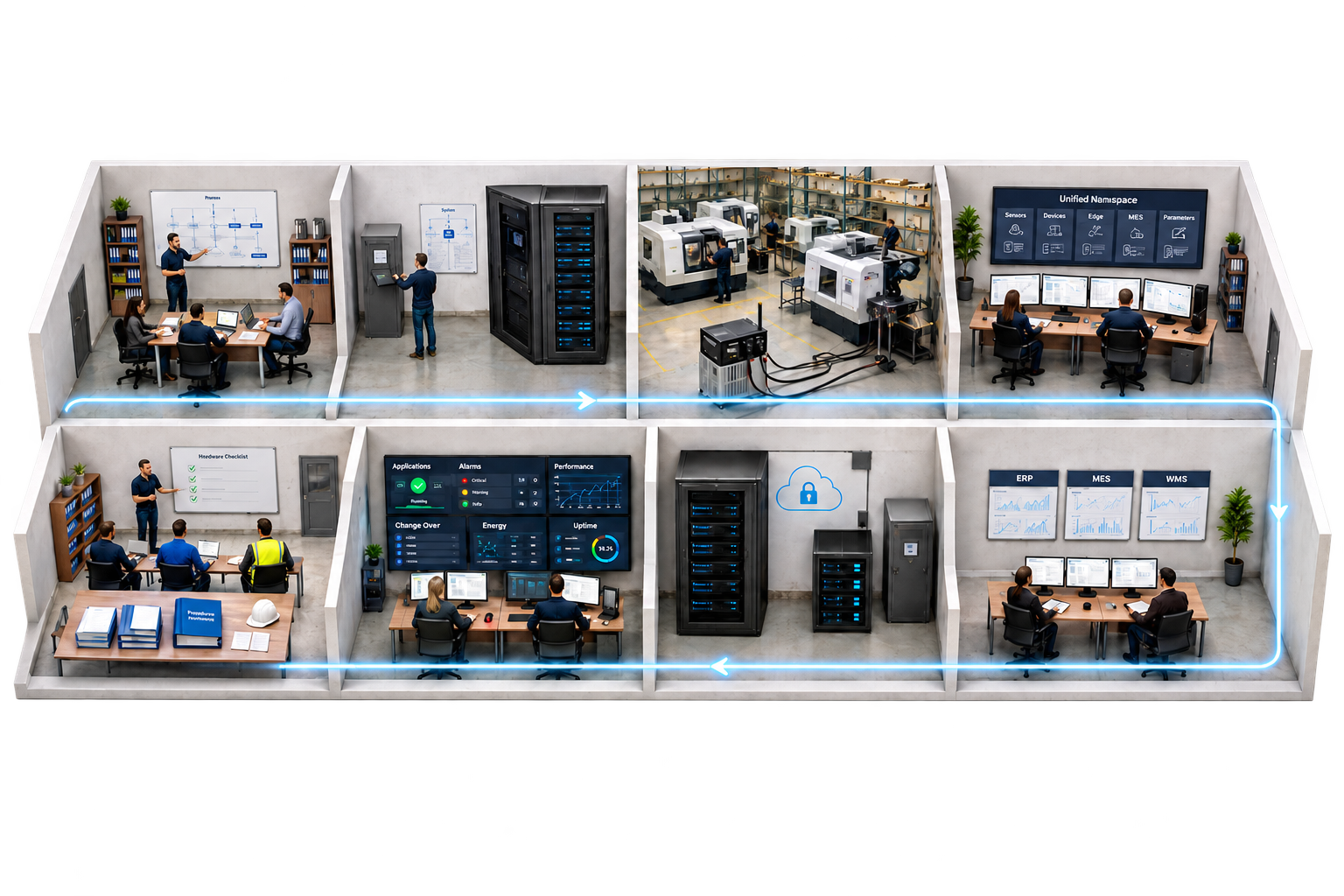
Aivhy connects the machines, systems and expertise already in place. Existing ERP, MES, WMS, QMS, CMMS, LIMS, databases and industrial networks can remain. We add the missing connections and workflows under the customer's governance.
Aivhy does not work around IT or add an uncontrolled black box. Architecture, cybersecurity, access, change control, documentation and support are agreed with IT and OT from the start.
These are three examples of where day-to-day IT and OT work can lose control, reliability or scalability. Every organisation has many more integration and improvement opportunities.
Uncontrolled cloud tools, gateways or machine connections create risk. Aivhy involves IT from the design stage and makes architecture, access, data ownership and responsibilities clear.
Each isolated connection adds technical debt and duplicate maintenance. A governed data layer and reusable interfaces make new operational use cases easier to manage.
An integration is not successful if it introduces machine instability or downtime. Controlled access, local buffering and read-only connections where appropriate protect operational continuity.
Controlled architecture. Systems, interfaces, ownership and dependencies are visible and documented.
Reusable operational data. Governed data flows can support several applications instead of one isolated connection.
Manageable lifecycle. Integration health, versions, certificates and changes remain visible after go-live.
Internal control. IT and OT teams receive the access, documentation and training needed to manage the environment.
Industrial integration becomes sustainable when operational connectivity, system health, data ownership and internal management remain part of one controlled environment.
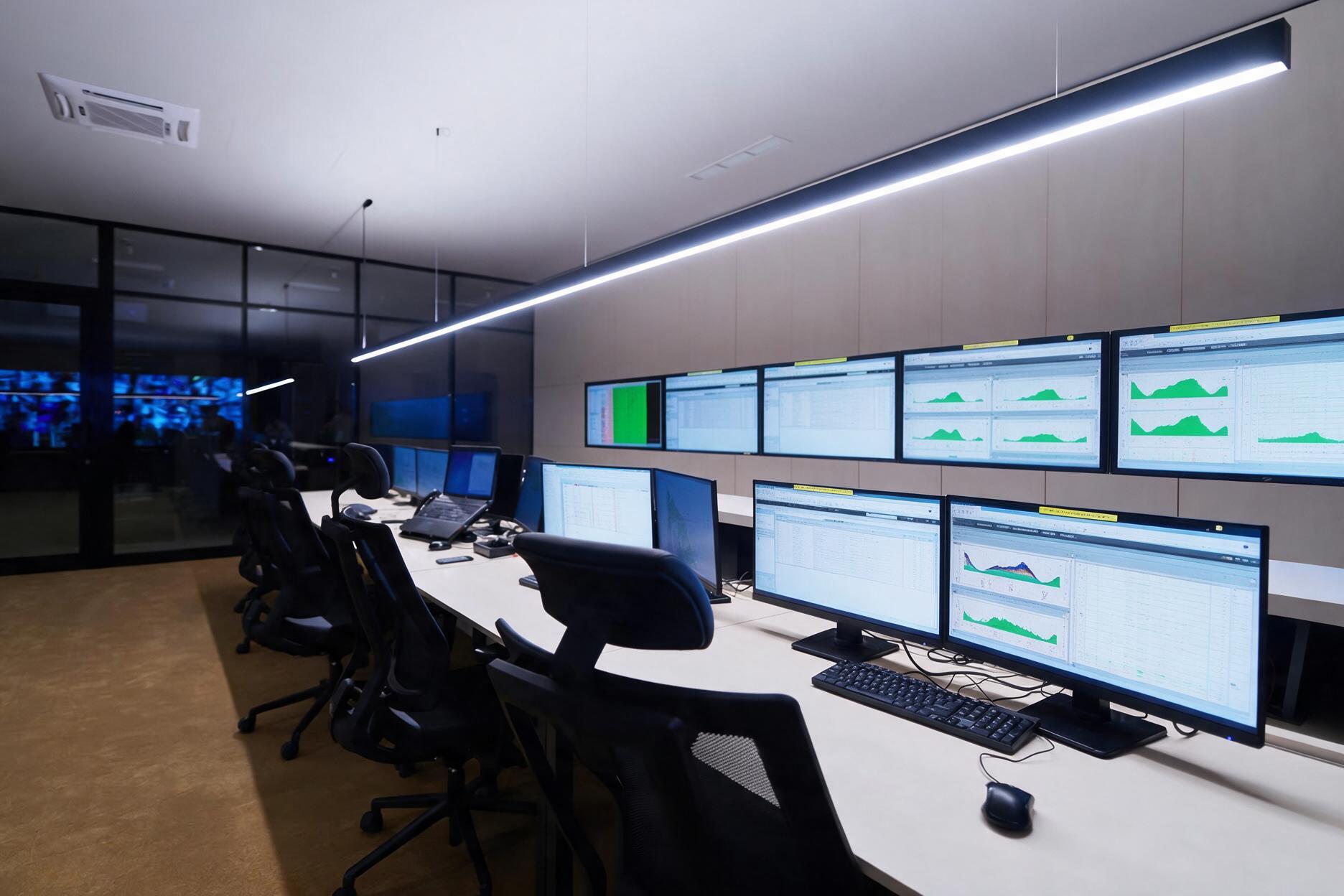
IT and OT teams can follow integration health, availability and actions from one controlled overview.
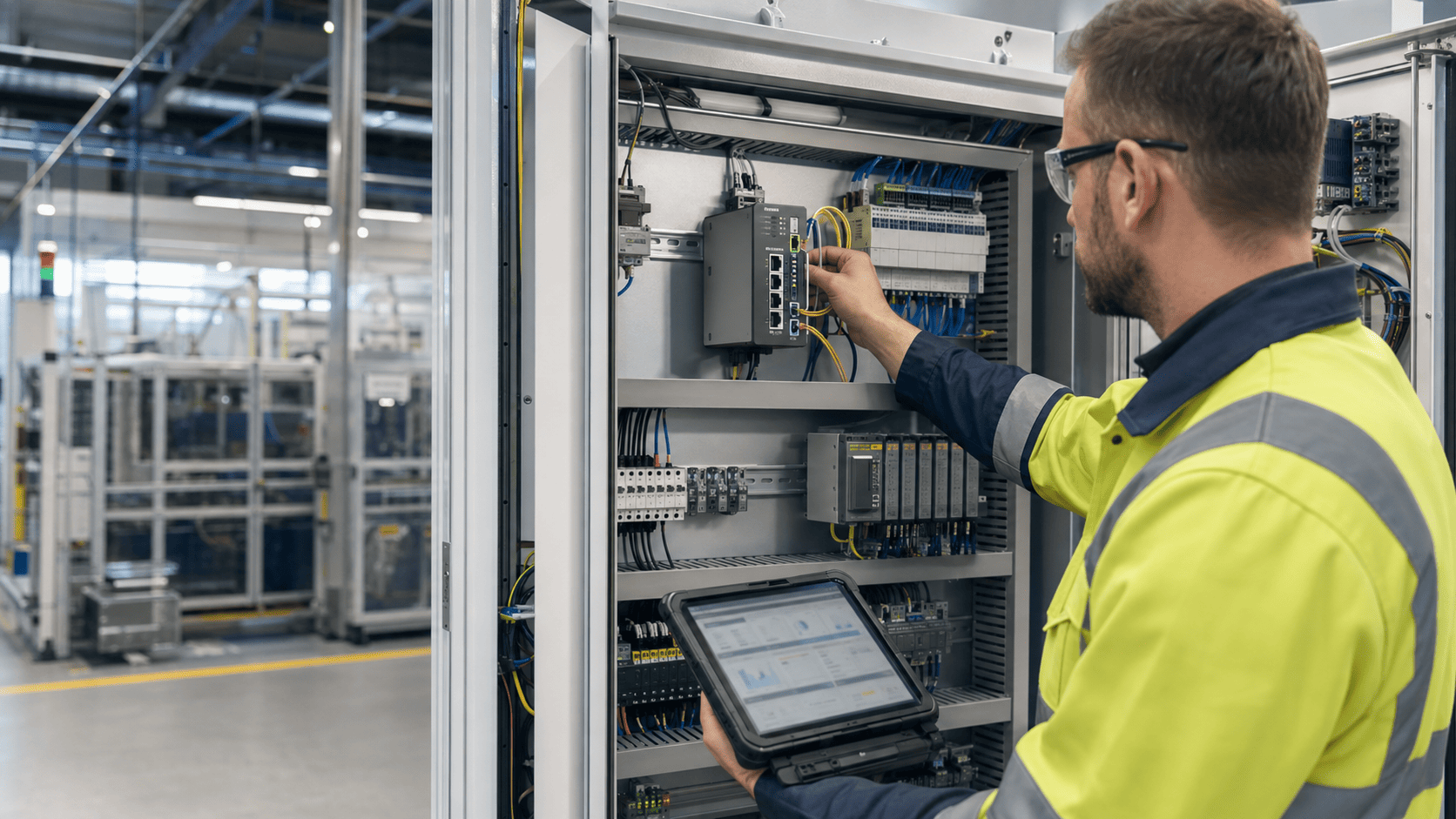
Deployment, access, documentation and support remain aligned with the organisation's governance.
Connect operational data with ERP, MES, WMS, QMS, CMMS, LIMS, BI and other existing applications.
Give connected systems one controlled place to share authorised real-time information, then structure and distribute it through a reusable, governed foundation.
Give operational teams live information and controlled workflows built on the same managed data and integration layer.
You do not need to replace the architecture already in place. Start with one integration risk, manual data flow, legacy connection or unsupported interface and define the right next step with IT, OT and Operations.